Hanuman Ansh (2026): The ₹2 Crore Devotional That Outgrossed the Spectacle Machine
Somewhere in the third week of August 2026, a projectionist in Mathura reportedly had to add a second daily show because the 11 a.m. screening kept selling out to the same families returning with neighbours in tow. That anecdote — small, unverifiable, entirely plausible — is a better opening chapter for Hanuman Ansh than any marketing beat the film ever got. Vishal Chaturvedi’s 150-minute biography of Neem Karoli Baba opened to ₹0.10 crore India net (Sacnilk, August 2026). It finished somewhere north of ₹200 crore gross on a reported ₹2 crore budget (Mathrubhumi, September 12, 2026). Taran Adarsh called it the biggest success story of 2026. He is not wrong, and the reasons are more interesting than the arithmetic.
The Cold-Open That Earns Its Silence
Act One’s defining beat — thirteen-year-old Lakshminarayan leaving his Braj home after his mother’s death — is the film’s structural keystone, and Chaturvedi stages it with a discipline that devotional cinema rarely permits itself. Vihaan Shedge, playing the young protagonist, doesn’t weep on cue. The camera holds on the doorway, then on his back, then on the empty room behind him. The score by Chaturvedi, Sadhu Sushil Tiwari and Shreyas Dharmadhikari withholds its strings until the boy is already out of frame. It is a departure scene built on subtraction, and it is the reason the film’s back half lands at all — because the audience has been taught, in that one sequence, that this story will not beg for their tears.
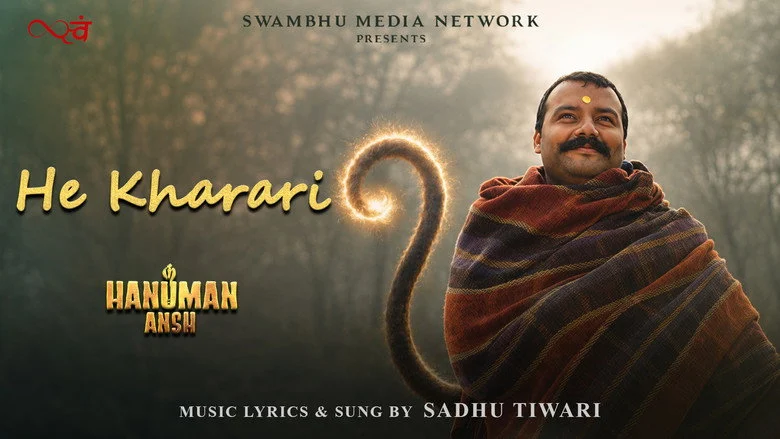
When Shobhinaw Satyaa finally emerges as the adult Neem Karoli Baba, the transition is deliberately undramatic. No swelling orchestral reveal, no age-progression prosthetics showcase. Just a man sitting among villagers, handing out food, chanting Ram. Satyaa’s resemblance to the historical figure — noted by the director in pre-release interviews — does half the work, but his stillness does the rest. DNA India’s Simran Singh put it precisely: “It does move you, leaves you impressed, not with the filmmaking, but with the journey of Baba, which deserves to be discussed.” That sentence is both the film’s greatest asset and its most honest limitation.
Seva as Spectacle: What the Feeding Scenes Actually Do
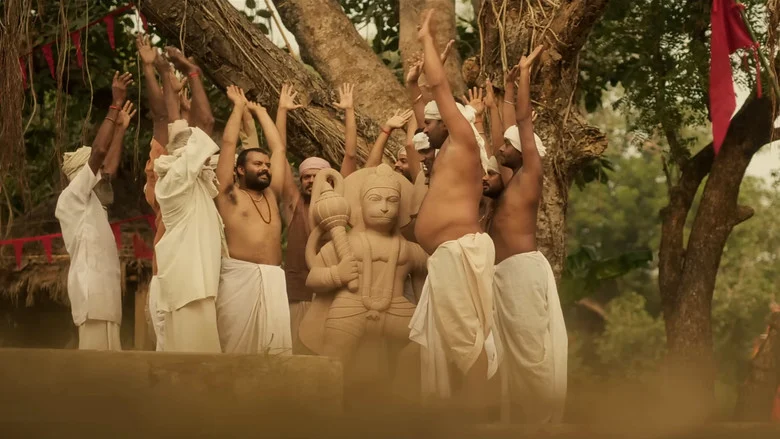
The film’s most-praised recurring motif — Baba feeding strangers, blessing silently, distributing prasad without sermon — functions as a structural argument. In a genre where the miraculous is usually rendered through VFX fireballs and divine apparitions, Hanuman Ansh locates transcendence in the ladle and the plate. Chaturvedi’s staging of these scenes is almost documentary in its plainness: handheld framing, natural light, ambient village noise. The reported “miracles” arrive as narrative afterthoughts, filtered through secondary characters’ testimony rather than shown directly. It is a theologically defensible choice and a commercially risky one, and the fact that it worked is the single most instructive trade lesson of the year.
For a sharper counterpoint to how this genre is typically engineered for maximum spectacle, our review desk’s take on Haiwaan remains instructive — the difference between a film that trusts its subject and one that doesn’t trust its audience is visible in every frame of both.
The Craft Question Nobody Wants to Ask
Here is the uncomfortable critical truth: Hanuman Ansh is not a well-made film in any conventional sense. The editing in the second half sags through repetitive devotional tableaux. The supporting cast — Chandan K Anand as Ram Nandan Bhosale, Purnima Tiwari as Ram Beti, Anil Rastogi as Mahant Ji — is functional rather than distinguished. The screenplay, adapted from the book Divine Detour, is strictly linear, and it occasionally mistakes chronological completeness for dramatic necessity. DNA India’s 3.5/5 rating is, if anything, generous on craft grounds.
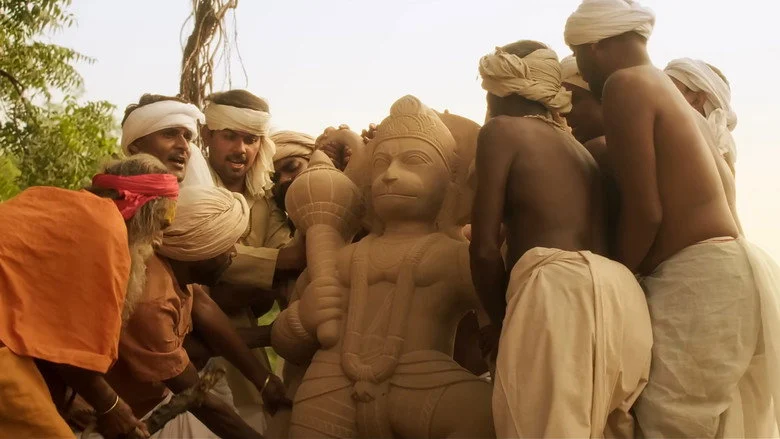
And yet. The ₹2 crore budget is not a limitation the film overcomes — it is the film’s aesthetic. The Braj locations look lived-in because they are. The faces in the crowd scenes look real because they probably are. When a film costs less than a single day of a mid-tier Bollywood star’s entourage, every rupee on screen carries evidentiary weight. Audiences, particularly in the Hindi heartland, have spent a decade being sold ₹200 crore spectacles that feel emptier than this ₹2 crore prayer. The IMDb score of 8.9 across 8,600+ votes is not a measure of filmmaking quality. It is a measure of recognition.
The Trade Phenomenon, Decoded
The numbers deserve their own paragraph because they are genuinely anomalous. Opening day: ₹0.10 crore. First week: ₹1.08 crore. Final India net: approximately ₹163 crore (India Today, September 11, 2026). That is a multiplier of roughly 1,500x from opening week to final tally — a figure that, in the post-pandemic era, has no precedent outside regional-language sleeper hits. The pattern — negligible opening, sustained week-over-week growth, overseas expansion from September 11 — describes a film that was discovered, not marketed. Word-of-mouth in devotional communities, temple networks, and family WhatsApp groups did what no promotional spend could.
Compare this to the star-heavy franchise model that dominated 2026’s release calendar — the kind of bloat we examined at length in our analysis of Stree 2 — and the contrast is almost ideological. One model buys its opening weekend. The other earns its eighth week.
What the Oscar Deadline Miss Reveals
Producer Namrata G Singh confirmed to the Indian Express (September 12, 2026) that Hanuman Ansh missed India’s Oscar submission deadline due to post-release work. Read that again: the film was still being finished, technically, while it was already in theatres and already a phenomenon. This is not a scandal. It is a portrait of a production that had no institutional infrastructure to anticipate success of this scale — no awards strategist, no festival team, no post-production buffer. The film succeeded entirely on the terms of its own making, and those terms did not include the machinery of prestige cinema.
Whether that matters depends on what you think awards are for. As we frequently examine across our film desk’s ongoing coverage, the gap between commercial discovery and institutional recognition is one of the defining tensions of contemporary Indian cinema. Hanuman Ansh sits squarely in that gap, and seems entirely at peace there.
Verdict
Watch Hanuman Ansh for the young Lakshminarayan’s journey, which anchors everything. Watch it for Satyaa’s stillness and Shedge’s restraint. Do not watch it expecting craft sophistication, narrative invention, or the polished emotional manipulation of mainstream devotional cinema — Chaturvedi is not that filmmaker, and this is not that film. Devotees and family audiences will find exactly what they came for. Viewers seeking spectacle should look elsewhere; the film has no interest in competing on those terms, which is precisely why it won on its own.
Rating: ★★★½ (3.5/5) — A film whose limitations are inseparable from its authenticity, and whose box office is inseparable from its soul.